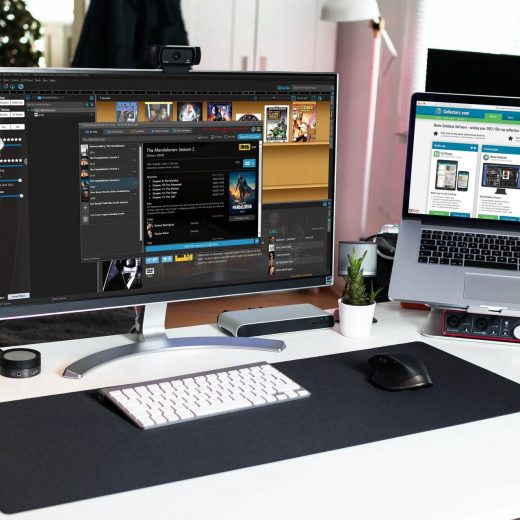
The art of software development is a moving target. Just a handful of years ago most Windows apps were flat slabs of gray with uninspiring color schemes drawn from a color palette which could be best described as “all the colors of a cement works”. Those that were not part of this mono-tonal subscribed to a more “burn your eyes out” range of ultra-yellows and a color clashing scheme which users could only view behind the safety of sunglasses. The theme was either gray bleakness or garish migraine. Luckily things have moved on. Beautiful theme styles, top quality and free too! Similar to Windows themes, VCL styles make it easy to radically change the appearance of your VCL applications, giving your application that extra level of polish and professionalism. Thanks to the Per Control VCL Styles introduced in 10.4, a single form can take advantage of multiple styles giving you maximum customization and control. RAD Studio, Delphi, and C++Builder ship with a selection of VCL styles, with additional premium styles available in GetIt, or from DelphiStyles. Learn how to give your apps a high-quality modern look In this webinar replay join Alexey Sharagin, the creative genius behind DelphiStyles, to learn everything you ever wanted to know about working with VCL styles, including how to customize and make your own. Properties of TStyleManager to adjust VCL styles for forms, dialogs, and menus Specifics of High-DPI support Benefits of using VCL Styles in application Per-control styling support details Creating and customizing styles with the Bitmap Style Designer tool Using styles from GetIt and DelphiStyles.com
Modernizing your app is vital if you want to remain competitive in today’s very crowded market. The process of modernization is actually pretty straight-forward but there are some easy pitfalls – things you might miss – and they can make the difference between time well spent or time wasted. RAD Studio is a modern Windows application too! RAD Studio itself is obviously an application and like any other it has to constantly evolve to ensure it keeps up with design and usability trends as well as working with new and emerging technologies. The RTL; Delphi’s runtime library, also is continually being enhanced and added-to so that it keeps making your life easier as a developer by simplifying the addition of powerful new features to your apps. Modernization? Let RAD Studio do the hard work for you. The strength of RAD Studio Delphi is its ability to add this supercharge to your code while keeping it as simple as possible. After all, the “RAD” in RAD Studio means RAPID application development and it’s the reason why we choose to use RAD Studio to build modern robust applications in the fastest times possible with the minimum of effort. The smart way to modernize is making RAD Studio Delphi do the hard work for us. The Windows UI Library provides official native Windows UI controls and other user interface elements for Windows apps. It maintains down-level compatibility with earlier versions of Windows 10, so your app works even if users don’t have the latest OS. In this video Embarcadero MVP Holger Flick takes us through a series of easy and yet powerful things we can do with RAD Studio Delphi to bring our apps up to the next level.
Developing a great application is not a “one and done” activity. In order to retain your hard-won users and remain competitive it’s essential for you to keep up with the trends in modern application design. New operating system versions can bring substantial changes to the expected look and behavior of your app. Not only that, when features are added such as notifications, alerts, user interaction models, your customer base will expect your application to take those changes on-board, embrace them and use them in ways they have come to expect by using other applications. RAD Studio makes it easier to keep up with new innovations in operating systems and devices It’s a constantly moving target but lucky for you RAD Studio and Delphi are also continually improving and adopting new technologies and functionality to help make your life easier and your applications at the cutting edge of design and UI. Here’s a great tutorial on how to modernize your legacy applications Stephen, Mary, and Al from the Migration Center are back to show you how easy and worthwhile it is to update your Delphi legacy projects to the latest devices, techniques and usability paradigms.
You might have an application with a huge amount of user-generated content coming daily and need to moderate content automatically. It’s a pain to moderate content manually because it takes lots of man-hours. How about using artificial intelligence with IDE Software for that? It will instantly detect inappropriate content prevent form going public. What is the Content Moderation API by DeepAI? DeepAI is a very popular source among artificial intelligence content seekers. It provide researches, guides, news and APIs of artificial intelligence. You can easily grab an API key by creating an account and access all of their artificial intelligence APIs. Just visit this link, create an account and then go to the dashboard and you will have your API key. https://deepai.org/ Is it free to use Deep.ai automated content moderation? When you register, you will have $5 USD free credit which is equivalent to 10,000 requests. No credit card required for the registration. After the registration, you only need to pay $0.50 USD per 1000 requests or there are some enterprise packages you can discuss with them. What Deep.ai artificial intelligence APIs are available to use in my Delphi application? They provide numerous amount of APIs. You can check their APIs form this list. Most of them also have a live demo in their product page. https://deepai.org/apis One of their powerful API is the “Content Moderation API”. This API give you the all details to moderate the content. Once you supply and image to the API, it will provide you “Not safe for work” score, description about inappropriate content, the rectangle area of the inappropriate content, and the confidence score which is one if 100% confidence. This API can detect adult content, hate symbols, guns and offensive words. How do I use the Content Moderation API? We can access all of the DeepAI APIs using a REST client including this content moderation API. A simple curl request for this API is like this: curl –data ‘image=YOUR_IMAGE_URL’ -H ‘api-key:API_KEY’ https://api.deepai.org/api/content-moderation It’s self-explanatory and you have provide the image URL or local image file as “image” and the API key as a header value. Once you send the request, server will send a JSON response and you can parse it to have all moderation information about the image. Sample moderation would be like this: { “id”: “UNIQUE_ID”, “output”: { “detections”: [{ “confidence”: “0.83”, “bounding_box”: [ 118, 89, 21, 29 ], “name”: “Female Breast – Exposed” }, { “confidence”: “0.92”, “bounding_box”: [ 142, 92, 27, 27 ], “name”: “Female Breast – Exposed” }, { “confidence”: “0.54”, “bounding_box”: [ 168, 153, 19, 30 ], “name”: “Male Genitalia – Exposed” } ], “nsfw_score”: 0.9997197985649109 } } You have to parse the JSON array inside the JSON to get the results. How do I access the Deep.ai Content Moderation API from Delphi? We can use REST client component to access the this API and easily build a demo application. Let’s make a demo application which will draw a rectangle if one of the restricted content found. First add a TRESTClient, TRESTRequest and TRESTResponse components in to a form. Set the base URL of the client to the following: https://api.deepai.org/api/content-moderation Set the method of RESTRequest to rmPOST because we going to securely post the data. Then it’s the coding time. We need to set the image, […]
Join Delphi MVP Ian Barker as he shows how to get the modern Windows 10 look and feel using RAD Studio’s themes and some *very* cost-effective third-party controls. Get that truly modern WOW factor kickstarted with minimal effort – Ian will show you how. What is The Fluent UI? The Fluent UI Microsoft’s ‘design language’ for the Windows 10 operating system. It dictates how to modernize certain user interface elements to add depth, movement and affordance (whether or not a screen element looks like it can be clicked, slid or otherwise used by user interaction). This video takes us on a tour of what Fluent UI is along with some resources to look at and examples. At the bottom of this post you should see other suggested videos and resources about Fluent UI and user interface design in general.
Sooner or later software developers need to undertake the task of extracting data, transforming it into something useful and loading it into other forms of representation and storage (ETL). During that process we’ll often also need to then present that aggregated or extracted data as a visual representation. What is data visualization? Data visualization is the art of making the useful, usable. If we display a torrent of facts and figures such as city populations in the form of a table it is useful – but it’s not very usable or even readily understandable. It’s far easier for us to represent that collection of numbers as a graph; specifically a chart. We humans are very visual and we can absorb and comprehend quite substantial and even complex hordes of figures much more effectively when they are presented visually. How does TeeChart help with data visualization? Since the very early versions of the Delphi IDE a version of TeeChart from Steema has shipped as a free add-on. Even today with the far more comprehensive, evolved and advanced RAD Studio Delphi there is a free copy of TeeChart waiting for you to use if you tick the little checkbox during the installation process. This free copy of TeeChart has meant that many Delphi programmers have learned to use TeeChart to provide things like pie charts, line graphs and scatter plots in their programs to represent all sorts of data when the need arose. There is a paid version of TeeChart too which offers more advanced functionality but don’t be fooled by the “free” in the free version; it’s got plenty of power too and more than enough of it for many things you could find a use for. Here’s the video..
HTTP is one of, if not the most, widely used client-server protocols. It has been serving up our favorite web pages, blogs, and even this site for many years through its lifetime carried on the shoulders of the reliable TCP. But technology is evolving, and over time it has become clear there are some limitations with HTTP. The first thing is that HTTP is unidirectional. With HTTP, the client starts the request first and the server responds. So for every resource, the client is the one who polling for the resource. Added to that, HTTP expects that each interaction has a timeout before it’s assumed that the server is not responding. How can an IDE Software create a robust and scalable real-time Web Socket and Server? Let’s find out all the answers in this post. What are the solutions for the HTTP limitations? Long-polling serves as a solution to the limitations of HTTP based technology. In this case, the client sends request with a long timeout. This allows the server lots of time to reply without the connection expiring due to inactivity or an inability to respond. This was a solution for up to a certain level, but this is very resource hogging. It’s because the server resources are reserved and dedicated to the client during the long polling. Are Websockets a better solution for HTTP limitations? Yes, Websockets are a better solution to help mitigate some of the HTTP timeout limitation. Websockets can use HTTP to initialize the connection and, using the same TCP connection, upgrade to a websocket. With Websockets, we have a persistent bi-directional connection which is less resource intensive than long polling. Both the server and client can push messages any time. Today most of the web browsers support the Websocket protocol. Also the fifth version of HTML (HTML5) includes support for websockets. So in general, Websockets allow you to build real time client server applications. How do I implement websocket applications with Delphi or C++ builder? IPWorks has a complete solution to implement both Websocket server and client. It has following components: TipeCertMgr: This component used to store certificates. TipeWebSocketServer: This is the server component which accepts websocket client requests. TipeWebSocketClient: This is the client component which can connect to a websocket server and send or receive data. TipeWebSocketProxy: This component will accept Websocket connections for a websocket server and instead redirect to another server. By using these components you can develop a complete Websocket client and server application. These components are native and doesn’t need any external libraries. Also the components are optimized and work efficiently. It’s very secure with the WebSocket Secure 256-bit encryption. These components are thread safe. As an added bonus they also have a good documentation to get started: https://cdn.nsoftware.com/help/IWF/dlp/ How do I use IPWorks WebSockets? IPWorks provide a free trial version of their WebSocket component pack for both Delphi and C++ builder. You can evaluate those components in your application. You can acquire the components from this link: https://www.nsoftware.com/ipworks/ws/download.aspx You can also use the GetIt package manager to search for an find trial versions of IPWorks: https://getitnow.embarcadero.com IPWorks WebSockets component installer comes with a demo application which works out of the box. It has a nice little Websocket echo server and a client application to connect to the websocket […]
DevExpress is a must-have component package for Windows IDE: Delphi. It provides hundreds of component sets and you can choose your component set according to your budget and needs. When looking at dashboard solutions by DevExpress, they offer many solutions for web and VCL applications along with a comprehensive collection of other technologies. What is the DevExpress Report and Dashboard server? DevExpress report and dashboard server is an enterprise ready solution for reporting and dashboard. It’s easy to setup. This report and dashboard server takes special care to be friendly and easy to use for your end-users.. Developers can let the users setup their dashboards and reports. Also we can assign users with several roles and assign privileges. The DevExpress report and dashboard supports almost any database. You can generate static reports or live dashboards very easily. For business, DevExpress can identify trends of your business out of the box. Regardless of your existing system, you can setup and make this up and running writhing minutes. User authentication is built in. Also this reports and dashboard has version control. So there is space for trial and error. Also you can easily localize all documents. What are the system requirements of DevExpress Report and Dashboard server? These are the system requirements for the current version of DvExpress report and dashboard server. Windows Server (2008 R2, 2012, 2012 R2, 2016, 2019), Windows 7, Windows 8 and Windows 10 Microsoft SQL Server 2008+ IIS 7.0+, .NET 4.6+ SMTP Mail Server HTTP Activation windows feature enabled HTTP Errors and Static Content windows features activated Windows Authentication windows feature activated IP Security windows feature enbled How to get started on building our dashboard visualization? You can get all the information to setup the DevExpress dashboard from this link: https://docs.devexpress.com/ReportServer/12432/report-and-dashboard-server Also you can try an online demo from this link: https://reportserver.devexpress.com/ui How to add VCL gauge and indicators to our dashboard visualization? DevExpress offers collection of easy to use VCL Gauge and Indicators. It includes: Circular gauges Liner gauges Digital gauges You can easily drag and drop a TdxGaugeControl to the form and add many scales as you need. You can read more information form here: https://www.devexpress.com/products/vcl/gauges/ What Delphi VCL UI components are available for building a dashboard? DevExpress offers very rich data aware components to use in dashboards. Some of them are: Spreadsheets Word processor Scheduler Tree lists Ribbons Form Layouts Grid Many types of editors Pivot grid Gauges Mapping PDF Viewer Source: DevExpress website DevExpress components are considered very reliable and extremely popular among RAD Studio Delphi and C++ Builder developers. Also, the components are touch friendly which is much more of a consideration in today’s world of hybrid devices such as the Microsoft Surface devices which are often used without a physical keyboard attached to them. You can read more about their VCL components from here: https://www.devexpress.com/products/vcl/ What is the DevExpress VCL Map control? You can use popular maps in your VCL application with this Map control. It support Bing or OpenStreetMap. If you can afford the high quality Bing maps form Microsoft or use the free version of OpenStreetMap. It has animations, scroll and zoom. You can overlay anything on VCL Map controls and match with your application and make it more useful. Source: DevExpress website
Sometimes your application needs a user interface, but what is the best way to make one for Python applications? Enter DelphiVCL for Python. The VCL is a mature Windows native GUI framework with a huge library of included visual components and a robust collection of 3rd party components. It is the premier framework for native Windows applications, but how to use it with Python? Thanks to the DelphiVCL Python package, the VCL is a first-class package for building native Windows GUIs with Python. Need more design tools? You can build the entire GUI in Delphi and then write all the logic in Python. DelphiVCL is the fastest, most mature, and complete GUI library for native Windows Python GUI development.
There’s a lot to consider once you’ve published your apps and they’re out there in the big wide World. Keeping relevant, matching new and emerging trends in both technology and user interfaces or interactions is a constantly-moving target. Luckily there are some easy-to-follow strategies to simplify those tasks and a number of things in RAD Studio which can help smooth the path and improve the robustness of your solutions. The Embarcadero Migration Team will help you keep your apps modern, responsive and top quality Stephen, Mary, and Al are back and walk you through the process of modernizing and migrating a legacy C++ application to the new C++Builder 10.4, specifically incorporating InterBase and FireDAC connections, among other innovations. A video about how to improve your app to keep it looking modern and top quality Follow along in this great video presentation where you get over an hour of their insights and advice, all for free!
Invormațiile pe cale Dvs le introduceți în prezentul formular nu se păstrează online, dar se vor transmite direct la destinație. Mai multe informații găsiți în Politica Noastră de Confidentialitate
We use cookies to ensure that we give you the best experience on our website. If you continue to use this site we will assume that you are happy with it.