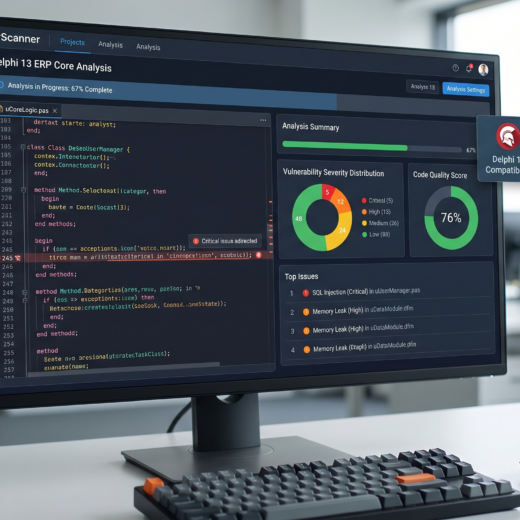
DerScanner Delphi Application Security: Fortifying Your Code in 2026
In 2026, securing Delphi applications is paramount, with DerScanner emerging as a vital tool for Delphi application security. Recent reports indicate that over 40% of software vulnerabilities stem from insecure coding practices, making proactive security analysis essential. DerScanner offers a robust solution for identifying and mitigating these risks within Delphi environments, ensuring the integrity and safety of your applications. This comprehensive guide explores DerScanner’s capabilities, its impact on Delphi application security, and best practices for its implementation. Understanding the Threat Landscape for Delphi Applications Delphi, a powerful Integrated Development Environment (IDE) for Object Pascal, has been a cornerstone for developing native applications across various platforms for decades. However, like any software development platform, applications built with Delphi are susceptible to security vulnerabilities. These vulnerabilities can range from common issues like SQL injection and cross-site scripting (XSS) – even in desktop applications through embedded web components or data interactions – to more specific weaknesses related to the Delphi runtime or its libraries. The threat landscape is constantly evolving. Attackers are increasingly sophisticated, targeting not just web applications but also desktop and mobile applications. Data breaches, intellectual property theft, and service disruptions are significant risks. For businesses relying on Delphi applications, a security lapse can lead to severe financial losses, reputational damage, and loss of customer trust. Therefore, understanding these threats is the first step toward effective defense. Common Vulnerabilities in Delphi Applications Several types of vulnerabilities can plague Delphi applications if not properly addressed during development: The Importance of Proactive Security Waiting for a vulnerability to be exploited is a reactive and often costly approach. Proactive security measures, integrated throughout the Software Development Life Cycle (SDLC), are far more effective. This involves identifying potential weaknesses early in the development process, allowing for their remediation before they become exploitable flaws. Static Application Security Testing (SAST) tools, like DerScanner, play a crucial role in this proactive strategy. Introducing DerScanner: A Powerful SAST Solution DerScanner is a cutting-edge Static Application Security Testing (SAST) tool designed to analyze source code for security vulnerabilities without executing the application. It scans your Delphi codebase, identifying potential security flaws, coding errors, and compliance issues. By examining the code structure, data flow, and control flow, DerScanner provides developers with actionable insights to enhance application security. The tool’s primary objective is to empower development teams to build more secure software from the ground up. It integrates seamlessly into the development workflow, enabling early detection and remediation of vulnerabilities, thus reducing the cost and complexity associated with fixing security issues later in the lifecycle or, worse, after deployment. How DerScanner Works DerScanner employs sophisticated analysis techniques to scrutinize your Delphi source code. Its core functionalities include: This multi-layered analysis allows DerScanner to detect a wide array of security issues, from simple coding errors to complex logical vulnerabilities. Key Features of DerScanner DerScanner stands out due to its robust feature set tailored for modern development needs: Enhancing Delphi Application Security with DerScanner Implementing DerScanner into your development workflow can significantly bolster the security posture of your Delphi applications. The tool acts as an essential layer of defense, complementing other security practices like secure coding training and dynamic analysis. Integrating DerScanner into the SDLC The most effective way to leverage DerScanner is by integrating it at multiple stages of the Software Development Life Cycle (SDLC): Addressing Specific […]


