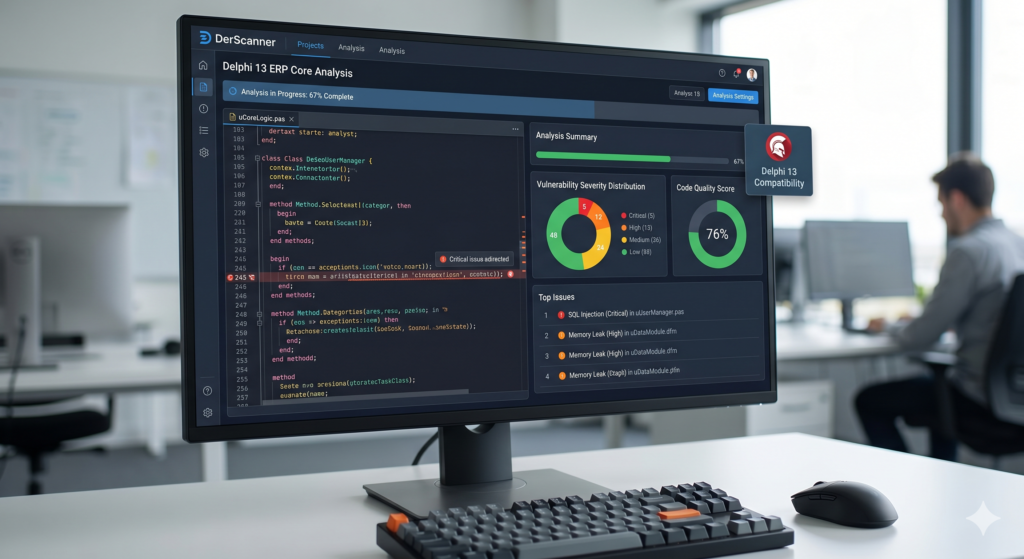
DerScanner Delphi Application Security: Fortifying Your Code in 2026
In 2026, securing Delphi applications is paramount, with DerScanner emerging as a vital tool for Delphi application security. Recent reports indicate that over 40% of software vulnerabilities stem from insecure coding practices, making proactive security analysis essential. DerScanner offers a robust solution for identifying and mitigating these risks within Delphi environments, ensuring the integrity and safety of your applications. This comprehensive guide explores DerScanner’s capabilities, its impact on Delphi application security, and best practices for its implementation.
Understanding the Threat Landscape for Delphi Applications
Delphi, a powerful Integrated Development Environment (IDE) for Object Pascal, has been a cornerstone for developing native applications across various platforms for decades. However, like any software development platform, applications built with Delphi are susceptible to security vulnerabilities. These vulnerabilities can range from common issues like SQL injection and cross-site scripting (XSS) – even in desktop applications through embedded web components or data interactions – to more specific weaknesses related to the Delphi runtime or its libraries.
The threat landscape is constantly evolving. Attackers are increasingly sophisticated, targeting not just web applications but also desktop and mobile applications. Data breaches, intellectual property theft, and service disruptions are significant risks. For businesses relying on Delphi applications, a security lapse can lead to severe financial losses, reputational damage, and loss of customer trust. Therefore, understanding these threats is the first step toward effective defense.
Common Vulnerabilities in Delphi Applications
Several types of vulnerabilities can plague Delphi applications if not properly addressed during development:
- Insecure Data Storage: Sensitive information like user credentials, personal data, or financial details stored unencrypted on the user’s machine or within the application’s database is a prime target.
- Buffer Overflows: Improper handling of data input can lead to buffer overflows, allowing attackers to overwrite adjacent memory, potentially leading to crashes or code execution.
- Input Validation Flaws: Applications that fail to properly validate user input can be vulnerable to injection attacks, where malicious code is inserted into data fields. This is particularly relevant if the Delphi application interacts with databases or external systems.
- Authentication and Authorization Weaknesses: Weak password policies, insecure session management, or flawed access control mechanisms can allow unauthorized users to gain access to sensitive functionalities or data.
- Component Vulnerabilities: Reliance on third-party components or libraries, if not kept up-to-date or if inherently insecure, can introduce backdoor vulnerabilities into the application.
- Information Disclosure: Applications may inadvertently reveal sensitive system information through error messages, logs, or metadata, which attackers can exploit.
The Importance of Proactive Security
Waiting for a vulnerability to be exploited is a reactive and often costly approach. Proactive security measures, integrated throughout the Software Development Life Cycle (SDLC), are far more effective. This involves identifying potential weaknesses early in the development process, allowing for their remediation before they become exploitable flaws. Static Application Security Testing (SAST) tools, like DerScanner, play a crucial role in this proactive strategy.
Introducing DerScanner: A Powerful SAST Solution
DerScanner is a cutting-edge Static Application Security Testing (SAST) tool designed to analyze source code for security vulnerabilities without executing the application. It scans your Delphi codebase, identifying potential security flaws, coding errors, and compliance issues. By examining the code structure, data flow, and control flow, DerScanner provides developers with actionable insights to enhance application security.
The tool’s primary objective is to empower development teams to build more secure software from the ground up. It integrates seamlessly into the development workflow, enabling early detection and remediation of vulnerabilities, thus reducing the cost and complexity associated with fixing security issues later in the lifecycle or, worse, after deployment.
How DerScanner Works
DerScanner employs sophisticated analysis techniques to scrutinize your Delphi source code. Its core functionalities include:
- Lexical and Syntactic Analysis: The tool first parses the code to understand its structure and grammar, ensuring it conforms to the Object Pascal language rules.
- Semantic Analysis: It then analyzes the meaning and context of the code, understanding variable types, function calls, and data flow.
- Data Flow Analysis: DerScanner tracks how data moves through the application, identifying potential points where sensitive information could be leaked or manipulated.
- Control Flow Analysis: It maps out the execution paths within the code, revealing potential logical flaws or vulnerabilities in conditional statements and loops.
- Vulnerability Pattern Matching: The tool utilizes a comprehensive database of known vulnerability patterns and security best practices to identify specific weaknesses in the code.
This multi-layered analysis allows DerScanner to detect a wide array of security issues, from simple coding errors to complex logical vulnerabilities.
Key Features of DerScanner
DerScanner stands out due to its robust feature set tailored for modern development needs:
- Comprehensive Vulnerability Coverage: It identifies a broad spectrum of security risks, including OWASP Top 10 vulnerabilities, common coding errors, and custom security rules.
- Delphi-Specific Analysis: DerScanner possesses deep understanding of the Delphi language and its common frameworks, enabling more accurate and context-aware analysis than generic SAST tools.
- Integration Capabilities: The tool can be integrated into CI/CD pipelines, IDEs, and version control systems, facilitating an automated and efficient security testing process.
- Customizable Rules: Organizations can define their own security rules and policies to align with specific industry regulations or internal security standards.
- Detailed Reporting: DerScanner provides clear, actionable reports that highlight vulnerabilities, their severity, location in the code, and recommended remediation steps.
- High Performance: Optimized for speed, DerScanner can analyze large codebases quickly, minimizing disruption to development cycles.
Enhancing Delphi Application Security with DerScanner
Implementing DerScanner into your development workflow can significantly bolster the security posture of your Delphi applications. The tool acts as an essential layer of defense, complementing other security practices like secure coding training and dynamic analysis.
Integrating DerScanner into the SDLC
The most effective way to leverage DerScanner is by integrating it at multiple stages of the Software Development Life Cycle (SDLC):
- During Development (IDE Integration): Many SAST tools offer IDE plugins. Integrating DerScanner directly into the Delphi IDE allows developers to receive real-time feedback on potential security issues as they write code. This “shift-left” approach catches vulnerabilities at their inception, making them easier and cheaper to fix.
- In CI/CD Pipelines: Automating security checks within the Continuous Integration and Continuous Deployment (CI/CD) pipeline ensures that code changes are scanned for vulnerabilities before they are merged or deployed. This prevents insecure code from reaching production environments. A typical workflow might involve a build job that triggers a DerScanner analysis. If critical vulnerabilities are found, the build can be automatically failed, preventing the deployment of vulnerable code.
- Pre-Commit Hooks: Implementing pre-commit hooks can scan code locally before it’s even committed to the version control system. This provides an immediate feedback loop to developers.
- Regular Audits: Beyond automated checks, periodic, comprehensive scans of the entire codebase can be performed to identify any vulnerabilities that might have been missed or introduced over time.
Addressing Specific Vulnerability Types with DerScanner
DerScanner’s detailed analysis capabilities allow it to pinpoint and help remediate specific types of vulnerabilities common in Delphi applications:
- SQL Injection Prevention: DerScanner can identify instances where user input is directly incorporated into SQL queries without proper sanitization or parameterization. It flags these potential injection points, guiding developers to use parameterized queries or stored procedures. For instance, it might detect code like
SQL := 'SELECT * FROM Users WHERE Username = ''' + Edit1.Text + '''';and flag it as a high-risk SQL injection vulnerability. - Mitigating Buffer Overflows: While less common in modern Delphi versions due to built-in memory management, older code or specific low-level operations can still be susceptible. DerScanner can identify potential buffer overflow risks associated with string manipulation or array handling, recommending safer alternatives.
- Secure Input Handling: The tool analyzes how applications handle external input from users, files, or network sources. It flags insufficient validation or sanitization, which could lead to cross-site scripting (if web components are used) or other code injection attacks.
- Detecting Information Disclosure: DerScanner can identify verbose error messages, debugging information left in production code, or insecure logging practices that might reveal sensitive system details.
- Component Security: While DerScanner primarily analyzes custom code, it can sometimes infer risks associated with the usage of certain components if their known insecure patterns are employed. It’s crucial to combine SAST with Software Composition Analysis (SCA) for a complete picture of third-party risks.
The Role of SAST in a Holistic Security Strategy
It’s important to understand that SAST tools like DerScanner are part of a broader security strategy. They excel at finding vulnerabilities in source code but cannot detect runtime issues or logic flaws that only manifest during execution. Therefore, a comprehensive approach should include:
- SAST (Static Application Security Testing): DerScanner falls into this category, analyzing source code.
- DAST (Dynamic Application Security Testing): Tools that test the running application by simulating attacks.
- IAST (Interactive Application Security Testing): Combines aspects of SAST and DAST, often using agents within the running application.
- SCA (Software Composition Analysis): Identifies vulnerabilities in third-party libraries and dependencies.
- Manual Code Reviews: Expert human review for complex logic flaws and architectural weaknesses.
- Penetration Testing: Simulated real-world attacks by security professionals.
- Secure Coding Training: Educating developers on secure coding principles.
By integrating DerScanner, organizations gain a powerful advantage in identifying and fixing code-level vulnerabilities early, reducing the burden on other testing phases and ultimately leading to more secure Delphi applications.
Best Practices for Using DerScanner Effectively
To maximize the benefits of DerScanner, consider implementing the following best practices:
1. Start Early and Scan Often
The earlier vulnerabilities are detected, the easier and cheaper they are to fix. Integrate DerScanner scans into your development workflow from the very beginning. Schedule regular scans, ideally automated within your CI/CD pipeline, to catch new vulnerabilities as they are introduced.
2. Understand and Prioritize Findings
DerScanner provides detailed reports, often including severity levels (e.g., Critical, High, Medium, Low). It’s crucial for development teams to understand these classifications and prioritize remediation efforts. Focus on critical and high-severity vulnerabilities first, as these pose the most immediate risk. Don’t ignore lower-severity issues, but address them based on risk assessment and available resources.
3. Configure Rulesets Appropriately
DerScanner comes with a default set of rules. However, to achieve optimal results, customize these rulesets. Enable rules relevant to your technology stack and industry compliance requirements (e.g., GDPR, HIPAA). Disable rules that generate excessive false positives or are not applicable to your specific application context. This tuning process improves the accuracy and efficiency of the tool.
4. Foster Collaboration Between Development and Security Teams
DerScanner bridges the gap between development and security. Encourage collaboration by sharing scan results and remediation guidance. Security teams can provide expertise on vulnerability impact, while development teams can implement fixes efficiently. This collaborative approach ensures that security is a shared responsibility.
5. Train Developers on Secure Coding Principles
While DerScanner identifies vulnerabilities, educating developers on why these vulnerabilities occur and how to avoid them in the first place is crucial. Provide training on secure coding practices relevant to Delphi development. This proactive measure reduces the number of vulnerabilities introduced, making DerScanner’s job easier and the overall application more secure. For instance, understanding the principles of input validation can prevent many injection-type attacks.
6. Integrate with Other Security Tools
As mentioned earlier, SAST is just one piece of the puzzle. Integrate DerScanner findings with your bug tracking system (e.g., Jira) and combine its results with DAST and SCA tools for a comprehensive view of your application’s security. This holistic approach ensures that all potential weaknesses are addressed.
7. Manage False Positives and False Negatives
No SAST tool is perfect. DerScanner may occasionally report false positives (identifying a vulnerability where none exists) or false negatives (failing to identify an actual vulnerability). Implement a process for reviewing findings, validating them, and reporting any inaccuracies back to the tool vendor or your internal security team for potential rule tuning. Addressing false negatives is particularly important, as they represent missed opportunities to fix real security flaws.
DerScanner in Action: A Hypothetical Case Study
Consider “Innovate Solutions,” a company developing a critical financial management application using Delphi. Their application handles sensitive customer data and transaction records. Historically, their security testing relied solely on manual reviews and post-deployment penetration tests, which proved costly and time-consuming, often revealing vulnerabilities late in the cycle.
The Challenge: Innovate Solutions needed to improve the security of their Delphi application, reduce development costs associated with security fixes, and meet increasingly stringent compliance requirements.
The Solution: They decided to implement DerScanner, integrating it into their existing Delphi IDE and CI/CD pipeline.
Implementation Steps:
- IDE Integration: Developers installed the DerScanner plugin for their Delphi IDE. As they wrote code, potential security issues were highlighted in real-time, with explanations and remediation suggestions. For example, when a developer entered code that concatenated user input directly into a database query string, DerScanner immediately flagged it with a warning: “Potential SQL Injection vulnerability. Consider using parameterized queries.”
- CI/CD Automation: Their Jenkins pipeline was configured to automatically trigger a DerScanner analysis upon every code commit. If DerScanner detected any “Critical” or “High” severity vulnerabilities, the build process would halt, preventing the integration of insecure code.
- Rule Customization: Innovate Solutions worked with their security team to fine-tune DerScanner’s rulesets. They enabled specific rules related to financial data handling and disabled certain generic web-related rules that were not applicable to their desktop application.
- Developer Training: Concurrently, they conducted secure coding workshops for their Delphi developers, focusing on topics like secure data storage, input validation, and avoiding buffer overflows, reinforcing the lessons learned from DerScanner’s findings.
The Results:
- Reduced Vulnerabilities: Within six months, Innovate Solutions saw a 60% reduction in critical and high-severity vulnerabilities detected during their final penetration tests.
- Faster Remediation: Developers could fix vulnerabilities identified by DerScanner much earlier in the development cycle, often within hours instead of weeks. This led to an estimated 30% decrease in the cost of fixing security defects.
- Improved Compliance: The proactive security measures helped them more easily meet compliance requirements for data protection and application integrity.
- Increased Developer Confidence: Developers felt more empowered and confident in their ability to write secure code, knowing they had a robust tool providing immediate feedback.
This case study illustrates how DerScanner, when integrated thoughtfully, can transform the security posture of Delphi applications, leading to significant improvements in both security and development efficiency.
Future Trends in Delphi Application Security
The landscape of application security is dynamic. As we move further into 2026 and beyond, several trends will shape how tools like DerScanner are utilized:
- AI and Machine Learning: Expect SAST tools to increasingly incorporate AI/ML capabilities for more intelligent vulnerability detection, reduced false positives, and predictive analysis of potential security risks based on code patterns.
- Cloud-Native and Microservices: As Delphi applications potentially integrate with cloud services or adopt microservice architectures, security analysis tools will need to adapt to scan code in these distributed environments and analyze inter-service communication security.
- DevSecOps Maturity: The integration of security into every phase of the DevOps lifecycle (DevSecOps) will become standard. SAST tools will need to offer seamless integration with a wider array of CI/CD platforms, cloud environments, and other security tooling.
- Focus on Supply Chain Security: With increasing concerns about software supply chain attacks, tools like DerScanner may evolve to provide better insights into the security of dependencies and third-party code integrated into Delphi projects.
- Shift Towards Automated Remediation: While DerScanner focuses on detection, future advancements might include more sophisticated automated remediation suggestions or even automated code fixes for common vulnerability types.
Conclusion
In 2026, ensuring the Delphi application security is not an option but a necessity. DerScanner provides a powerful, specialized solution for identifying and mitigating security vulnerabilities directly within Delphi source code. By integrating DerScanner into the development workflow, organizations can proactively address risks, reduce remediation costs, and build more robust, trustworthy applications. Embracing SAST tools like DerScanner, alongside other security best practices, is crucial for staying ahead of evolving threats and protecting sensitive data in today’s interconnected digital world. The commitment to secure coding, supported by advanced tools, fortifies Delphi applications against potential cyberattacks, safeguarding both businesses and their users.
Frequently Asked Questions about DerScanner and Delphi Application Security
What is DerScanner?
DerScanner is a Static Application Security Testing (SAST) tool designed to analyze source code for security vulnerabilities without executing the application. It specifically supports Delphi applications, examining their source code for potential weaknesses.
How does DerScanner help improve Delphi application security?
DerScanner enhances Delphi application security by automatically scanning the source code to identify vulnerabilities such as SQL injection, buffer overflows, and insecure data handling. It provides developers with actionable insights to fix these issues early in the development cycle, reducing risks before deployment.
Is DerScanner suitable for large Delphi projects?
Yes, DerScanner is designed for efficiency and can analyze large Delphi codebases. Its performance allows for integration into CI/CD pipelines, making it suitable for enterprise-level projects.
Can DerScanner find all types of security vulnerabilities in a Delphi application?
DerScanner excels at finding vulnerabilities within the source code itself (SAST). However, it cannot detect all types of issues, such as runtime errors or certain logic flaws that only appear during execution. A comprehensive security strategy should include other testing methods like DAST.
How does DerScanner compare to other SAST tools for Delphi?
DerScanner offers specialized, in-depth analysis tailored for the Delphi language and its ecosystem. This deep understanding often leads to more accurate detection and fewer false positives compared to generic SAST tools that may not fully grasp Delphi-specific constructs or common framework patterns.
What is the cost of DerScanner?
Pricing for DerScanner typically depends on factors like the number of developers, features required, and licensing terms. Interested parties should contact the vendor directly for the most current pricing information and potential trial options. You can find more details on their official website.


