From the blog

5 motive esențiale de a utiliza InterBase in 2020

InterBase in 2020 will continue to be, one of the hidden gems of the relational database world. From its inception in the early 1980s, through mainstream adoption and evolution under Borland, InterBase looks back at a track-record that spend decades; at times defining the standard that all other databases were measured against. With Embarcadero acquiring the Borland development portfolio in 2008, InterBase has again been brought up to speed with the latest technological advances; surpassing them even with features like Change Views. Thanks to steadily refactoring and evolution since Embarcadero took over; its performance and scope have seen radical performance gains. Once again InterBase is the cutting edge, synonymous with performance, security and platform diversity. The optimizations invested in our gentle giant over the past eight years alone are too many to list. Embarcadero has done an amazing job on modernizing this much loved — and dare I say, archetypal relational database. At the same time, they have managed to retain the functionality that is quintessentially InterBase: Features that set the product apart. For an old Delphi developer like myself, using InterBase in my production environment again is an emotional experience. InterBase was part of my university curriculum and used in my first commercial software development alongside Delphi. Familiar yet unmistakably modern, fresh yet mature and established. I want to present five good reasons why InterBase should be your next database. Writing about a subject I am passionate form easily turns into a novel, which is why I am limiting the features to a modest five. Let’s jump in and look at why should InterBase in 2020 be your next database? 1: Platform Diversity The world of technology has changed dramatically in a very short time. The way that technology evolves, be it software or hardware, is typically through sudden, unexpected leaps. The mobile revolution of 2007 spearheaded by Steve Jobs, as he unveiled the iPhone at the Apple developer conference in San Francisco, was one such leap. Overnight, the criteria for software development were irrevocably changed. Fast forward to 2020 and two-thirds of the planet’s population are walking around with a proverbial super-computer in our pockets. Each filled with applications, ever-growing in complexity, and with a very real need for reliable data persistence. Today business is conducted more and more on mobile devices, and with that, the ability to deploy software to different platforms, operating systems and hardware is a necessity. Multi-platform computing is now the prerequisite that all developers, regardless of programming language, must base their strategy on. When you need multi-platform support, InterBase is a pioneer and ahead of its time. Already in the late 80s, InterBase was available for a variety of computer systems; from large and powerful business machines running Unix, to more modest home computers like the Apollo or the Commodore Amiga. The targets of 2020 are very different, but InterBase remains the same versatile and platform-independent database system that it has always been. Today, it can be deployed to all leading platforms and operating systems: Windows, Linux, macOS, Android, and iOS. InterBase also supports heterogeneous OS connectivity across all supported platforms. The ability to use the same database on multiple architectures is by far my favorite feature. It saves time, reduces cost, and makes life significantly easier during maintenance. Internet of Things is InterBase in 2020 With the […]

Read More

New Sencha Ext JS Release PROMO

Reduceri la soluțiile Sencha. Începând cu data de 20 Ianuarie 2020, cu ocazia lansării versiunii 7.1 a soluției Sencha Ext JS, se lansează promoția specială cu reducere de 10% la achiziția licentelor noi ale produselor Sencha Ext JS, Sencha ExtAngular, Sencha ExtReact, Sencha ExtWebComponents, Sencha GXT and Sencha Test. Promoția este valabilă până pe data de 10 Februarie 2020. Solicită oferta promoțională Sencha prin formularul de mai jos : De ce se aplici la Sencha Ext JS discount? Significant improvements to the Ext JS Modern and Classic toolkits. High fidelity UI and UX component enhancements to Sencha’s popular grid component, focused on row editing, horizontal and vertical scrolling, improvements to grid locking capabilities, drag and drop and data-bound grid applications. Improvements to text and form input components including combo box, radio group, text area, and tag field, spanning usability, responsiveness, performance and Material theme styling. New component examples in the API docs for Ext JS, ExtAngular, ExtReact and ExtWebComponents which make it easy to copy-paste the source to your application. The improved API documentation for Ext JS, ExtAngular, ExtReact and ExtWebComponents making it easier to find properties, methods, and events. Upgraded Froala WYSIWYG Editor to support the version 3.0 Improvements to ExtGen View Package generation Several quality improvements to JetBrains plugin Quality improvements to Sencha Themer tool Through each release, we will continue to deliver quality improvements and enhanced usability to the Ext JS Modern and Classic toolkits. We’ll also add features that improve developer productivity.Our engineering team has started on Ext JS 7.2 containing many quality, performance, and usability enhancements. Read more in our previously released product roadmap blog post. Produse Sencha din promoție: Promoția actuală cu Sencha Ext JS discount în Romania este prezentată de partenerul exclusiv Sencha – Dimensional Data România. Nu ezitați să ne contactați pentru o consultanță referitor la soluțiile Sencha din promoție sau alte IDE tools din catalogul nostru.

Read More

New Release: Sencha Ext JS 7.1!

The Sencha product team is thrilled to announce the General Availability of Sencha Ext JS 7.1 – version 7.1 for Ext JS, ExtAngular, ExtReact, ExtWebComponents and tooling. Read on to learn more about the improved product features of this release. Highlights of Sencha Ext JS 7.1 Significant improvements to the Ext JS Modern and Classic toolkits. High fidelity UI and UX component enhancements to Sencha’s popular grid component, focused on row editing, horizontal and vertical scrolling, improvements to grid locking capabilities, drag and drop and data-bound grid applications. Improvements to text and form input components including combo box, radio group, text area, and tag field, spanning usability, responsiveness, performance and Material theme styling. New component examples in the API docs for Ext JS, ExtAngular, ExtReact and ExtWebComponents which make it easy to copy-paste the source to your application. The improved API documentation for Ext JS, ExtAngular, ExtReact and ExtWebComponents making it easier to find properties, methods, and events. Upgraded Froala WYSIWYG Editor to support the version 3.0 Improvements to ExtGen View Package generation Several quality improvements to JetBrains plugin Quality improvements to Sencha Themer tool Sencha Ext JS 7.1 – New Component Examples Configuring Sencha Grid in the framework of choice is simple. Find more angles and examples on how to configure the Grid in our revised API Docs. Ext JS Components We’re driving an accentuated focus on Ext JS Classic and Modern toolkit quality fixes to make it easier and faster to build data-rich applications. The engineering team has implemented numerous Ext JS Grid improvements such as quality enhancements to the editing, scrolling, locking, drag and drop, RadioGroup, Combo, Tagfield features and more. Here’s one of our new examples for the Ext JS Modern Grid. Try it out in the fiddle. ExtReact Components The Ext JS components for React (ExtReact) have been drastically improved. We have improved the runtime used for React There are improvements in the documentation and all quality improvements for Ext JS directly flow into the React library as well. Intermix our components in any method in JSX. The API Docs docs now reflect the Ext JS Component declaration that can be used in JSX. Here’s one of our new examples for the ExtReact Grid. Try it out in the fiddle. ExtAngular Components We have new and renewed improvements in the Ext JS components for the Angular framework (ExtAngular). The runtime used for Angular has been greatly improved. Improved documentation accuracy. All the quality improvements for Ext JS are also reflected in the ExtAngular library. The API docs now reflect the Ext JS component declaration which can be used in the HTML Angular markup. ExtWebComponents in Sencha Ext JS 7.1 Last year we launched ExtWebComponents, a framework agnostic approach to application development. This release adds some additional improvements to this product as well. Writing platform-agnostic applications with JavaScript ECMA 2016+ classes, syntax is easier. We have improved the runtime for the web components. All the quality improvements for Ext JS are also reflected in ExtWebComponents. The API docs now reflect the Ext JS component HTML element tag name for ext-grid. The new ExtWebComponent charting example (written with custom elements and ECMA 2016+ syntax) shows how to use the fetch API in any browser using polyfills for older browsers. Learn how to generate data-rich apps quicker with Ext JS web components. […]

Read More

Ext JS și Google Maps pentru vizualizarea datelor geospațiale

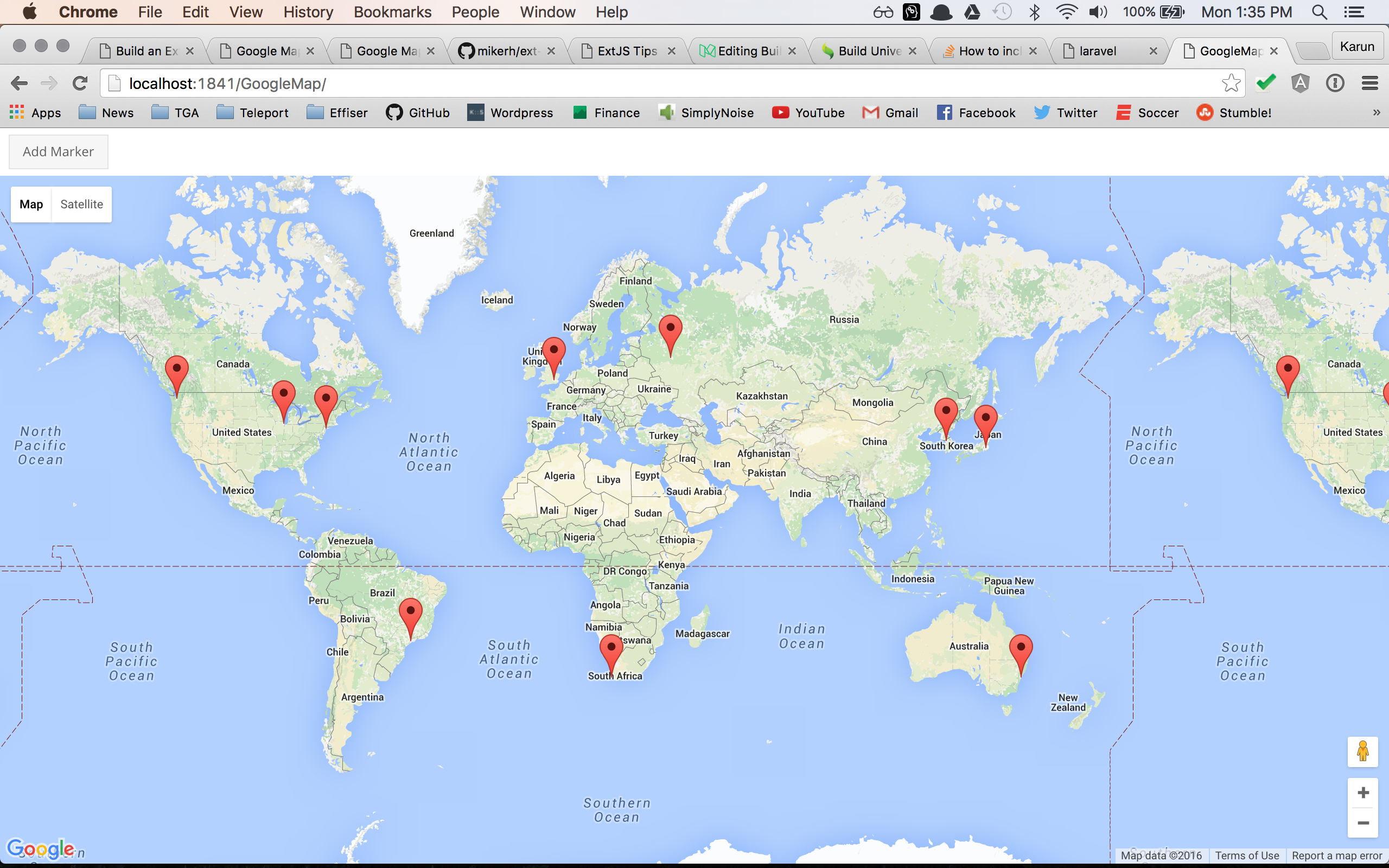
Vizualizarea datelor geospatiale utilizând Ext JS și Google Maps Deseori,când vine vorba de lucrul cu date geospatiale (adică date care au asociate informații despre locație), aveți de multe ori nevoie de o modalitate faină de a vizualiza datele din aplicația dvs. pentru a fi utile. Ext JS include un pachet „ux” care conține diferite extensii de utilizator (inclusiv una pentru Google Maps) care vă permite să încorporați cu ușurință o hartă cu informații pe ea în aplicația dvs. Ext JS, împreună cu funcționalitatea încorporată de adăugare automată a markerilor pe hartă în baza datelor dintr-o baza de date din aplicația Dvs. Prin aceasta postare vom demonstra o aplicație simplă construită folosind Ext JS și Google Maps care conține o grilă și o hartă pentru vizualizarea locației clienților. Această aplicație este proiectată să funcționeze atât pe telefon, cât și pe desktop. Atât grila, cât și harta se vor lega de aceeași sursă de date – un set de date de exemplu care conține nume de clienți, adrese, coordonate latitudine / longitudine și număr de licențe software pe care le dețin. Primii pași Vom începe cu setările inițieale în Ext JS și Google Maps. Pentru a crea această aplicație, începeți prin crearea unei aplicații Ext JS noi. Pentru acest exemplu, am folosit Sencha Ext JS 7.0 Modern Toolkit. Pentru ca Google Maps să se redea corect în aplicația dvs., va trebui să generați o cheie API Google Maps prin intermediul consolei Google Cloud Platform, așa cum este descris aici. Această cheie API se asociază la una sau mai multe adrese URL unde aplicația rulează și permite redarea hărților personalizate fără a fi necesar un mesaj de eroare „Google Maps API is required”. După ce ați generat cheia API prin Google Cloud Platform Console și i-ați asociat o adresă URL permisă (de exemplu http: // localhost: 1841), deschideți fișierul app.json și adăugați următoarele în rădăcina fișierului, făcând astfel asigurați-vă că introduceți propria cheie API: Sencha Ext JS va adăuga această cheie (împreună cu orice alți parametri de șir de interogare specificați) la solicitarea la încărcarea Google Maps JavaScript API. În timp ce aveți fișierul app.json deschis, va trebui să adăugați și pachetele ux și google în tabloul necesar: Crearea modelului și a Main View Data model pentru această aplicație este o structură simplă, cu coordonate de nume, adresă, latitudine și longitudine și un câmp care conține numărul de licențe deținute de client: Codul pentru Main View va combina vizualizarea grilă și harta (ambele sunt create în secțiunea următoare). Aceast View prezintă grila și harta poziționate unul lângă celălalt pe orizontală folosind un layout hbox. Totuși, acest lucru nu va arăta grozav pe un telefon, datorită ecranului îngust, așa că putem schimba dinamic aspectul în funcție de tipul platformei și puteți trece la utilizarea unui layout vbox dacă nu folosiți un dispozitiv desktop, specificând următoarea platformConfig pe Main View. Această configurație va poziționa grila deasupra hărții folosind un layout vbox, folosind mai bine spațiul disponibil fără a fi nevoie să definiți vizualizări complet separate (una pentru desktop și alta pentru telefon). Puteți perfecționa acest lucru în continuare adăugând reguli suplimentare bazate pe dimensiunea ecranului sau orientarea ecranului. Vederea principală are, de asemenea, un View Model asociat cu acesta, care conține configurația Magazinelor Clientului și câteva exemple de date înscrise: Ext JS și Google Maps […]

Read More

Un C++ Modern Pentru Windows10

Limbajul de programare C ++ progresează rapid. În 2009, când a fost lansat Windows 7, majoritatea dezvoltatorilor C ++ încă mai foloseau C ++ 98/03 (standardizat în 1998 și 2003), poate plus bibliotecile Boost sau TR1. De atunci, standardele C ++ din 2011, 2014 și 2017 au fost lansate, cu multe schimbări semnificative. Și acum Vă oferim atenției Dvs un IDE performant C++ Modern Pentru Windows10 Cum combinați cu succes C ++ modern pentru Windows 10? C ++ Builder suportă C ++ 17, cel mai recent standard. De asemenea, are suport excelent pentru Windows 10. Să ne uităm la câteva elemente. Suport Windows 10 C ++ Builder progresează în proiectarea UI și construirea rapidă și iterarea aplicațiilor UI. Framework-ul său VCL utilizează controale native Windows, ceea ce înseamnă că obțineți comportamentul real al platformei, spre deosebire de unele cadre care nu se potrivesc niciodată cu aspectul sistemului de operare pe care rulează aplicația. Are multe controale specifice Windows 10, care le permit adesea să fie utilizate și pe versiunile anterioare ale Windows: Produse Embarcadero în promoție: Selectoarele pentru data și ora, vizualizarea de calendar și altele, sunt versiunea modernă a controalelor tradiționale, cu excepția switch -lui, care este probabil nou pentru Windows: Cu toate acestea, una dintre cele mai importante perechi de componente sunt controalele TImageCollection și TVirtualImageList. Suportul High DPI este o funcționalitate importantă în Windows 10, iar aplicațiile construite cu C ++ Builder suport perMonitorv2 High DPI (cea mai recentă versiune care acceptă cel mai bine schimbarea rezoluțiilor pe mai multe ecrane.) O funcționalitate semnificativă a aplicațiilor High DPI este aceea de a avea pictograme fără probleme și imagini, iar aceste două componente asigură că într-un mod mai bun decât listele de imagini proprii Windows (a se vedea documentația) Sunt tehnologie brevetată și sunt un exemplu excelent de tehnologii ultra-moderne, mai bune decât platforma, la care puteți accesa cu C ++ Builder. În stânga, o aplicație mică, nescalată. În dreapta, cum arată la 800%. Observați cât de clare sunt icoanele – acesta este ceva semnificativ mai greu de obținut în Windows fără a utiliza tehnologia noastră înaltă de gestionare a imaginilor DPI. Suport C ++ modern C ++ Builder 10.3.2 suportă C ++ 17 pentru aplicațiile Windows. C ++ modern este diferit de cel tradițional (C ++ 03 și anterior) în câteva moduri cheie: Focus pe cod mai sigur și mai corect – de exemplu, siguranța memoriei cu indicatoare inteligente Focus pe codul mai scurt, mai expresiv – de exemplu, cu lambdas Focus pe simplificarea scrierea C ++ – de exemplu, cu deducerea tipului (specificatorul automat) Aceste trei lucruri caracterizează forma C ++ pe măsură ce a fost dezvoltată și este un limbaj foarte puternic și flexibil. Un număr mare de aceste modificări au avut loc în C ++ 11 și C ++ 14, cu mai multe în C ++ 17. Îmi place în mod deosebit scrierea C ++ 17 a lui Tony van Eerd și, dacă doriți să citiți mai multe despre C ++ modern pentru Windows10, în general, foaia de lucru a lui Anthony Calandra către C ++ modern. C ++ Builder acceptă și livrează cu, Boost 1.68, o versiune recentă a celui mai popular set de terțe biblioteci C ++ în rândul dezvoltatorilor C ++. Dacă aveți nevoie de o bibliotecă, o puteți găsi printre […]

Read More

Upgrade Your WinApps To Windows 10 With RAD Studio

Odată cu încheierea perioadei de asistență pentru Windows 7 în data de 14 Ianuarie 2020, nu a fost niciodată un moment mai bun pentru a vă upgrada aplicațiile pentru Windows 10 with RAD Studio.  RAD Studio oferă asistență extinsă pentru Windows 10. Cu RAD Studio 10.3.3, puteți actualiza rapid și ușor aplicațiile VCL la Windows 10 cu componentele de control Windows VCL, stiluri și servicii WinRT / UWP Windows 10. Acest lucru face ușor să abordați paradigme UI comune pe Windows 10. Embarcadero oferă o serie de controale VCL UI special concepute pentru Windows 10. Include documentație detaliată și demonstrații pentru diferitele controale VCL la care aș recomanda să aruncați o privire: TSplitView este un container pentru alte controale care pot fi deschise și închise, similar cu TMultiView în FireMonkey TRelativePanel este un panou de aspect care vă permite să poziționați și să aliniați obiectele copil în raport cu celălalt sau cu panoul părinte TToggleSwitch oferă două stări, pornit și oprit TDatePicker și TTimePicker sunt controale moderne de selectare a datei și a orei TCalendarView și TCalendarPicker oferă vizualizări de lună, an și decenii TSearchBox este un control de editare care oferă funcții de căutare TActivityIndicator oferă un indicator rotativ animat pentru utilizare în aplicațiile Windows 10 TCardPanel este o componentă specializată care gestionează o colecție de carduri TStackPanel este un control al containerului care vă permite să aliniați automat toate controalele parentale vertical sau orizontal, păstrând setările personalizate pentru înălțime și lățime ale fiecărui control. Solicită oferă personalizată RAD Studio! Folosind stiluri, este foarte ușor să schimbați complet aspectul aplicației dvs. VCL. Pentru a seta un stil pentru aplicația VCL, selectați stilul în Proiect> Opțiuni> Aplicație> Aspect. Puteți alege dintre mai multe stiluri VCL Windows 10 încorporate sau să descărcați altele prin intermediul pachetului GetIt Package Manager (Instrumente> Manager pachet GetIt) din categoria Stiluri. De asemenea, oferim multe stiluri Windows încorporate pentru FireMonkey și cele personalizate pe care le puteți descărca prin intermediul pachetului GetIt Manager și se pot aplica aplicației Windows FireMonkey folosind TStyleBook.

Read More

Promoție Embarcadero de Iarna

Începem noul an în forță cu o promoție Embarcadero pentru soluțiile RAD Studio, Delphi si C++ Builder, valabilă până pe data de 31 Ianuarie 2020! Pe parcursul lunii Ianuarie 2020, toți cumpărătorii licențelor RAD Studio, Delphi sau C++ Builder primesc 2 ani de mentenanță și suport în loc de un an, inclus standard. Valoarea suportului anual fiind de până la 20% din pretul licenței respective, în dependență de ediție. Solicitați oferta personalizată! Ediția 10.3.3 Rio este cea mai recentă ediție disponibilă la momentul actual, oferind caracteristici infinite de dezvoltare a aplicațiilor cross-platform cu supportul platformelor ceel mai populare penru momentul actual, care vă ajută să construiți, să testați și să implimentați aplicații moderne rapid și în limita bugetului. Promoție Embarcadero este administrată de către partenerul oficial Embarcadero în România, compania Dimensional Data. RAD Studio 10.3 Release 3 builds on the feature set of 10.3, 10.3.1 and 10.3.2 by adding new capabilities throughout the product. Delphi 10.3.3, C++Builder 10.3.3 and RAD Studio 10.3.3 are now available to download for any active Update Subscription customer. With Release 3, developers can target the Google Play Store with 64-bit versions of their FireMonkey Delphi apps, simplify their multi-tier application development and deployment of RAD Server through a pre-built Docker image and build C++ and Delphi applications for iOS 13 and Delphi apps for macOS Catalina. Developers can also access over 70+ data sources with a newly included Enterprise Connector subscription license for Enterprise and Architect edition users.  RAD Studio 10.3 Release 3 also has an extensive quality focus, addressing over 180 customer requests in areas like App Tethering, FireMonkey mobile platforms, C++ compiler and toolchain, IDE responsiveness and more. See below for additional details.  Product trials for 10.3.3 are now available and the updated product builds are live in the online store. Customers on Update Subscription can download and install RAD Studio 10.3.3 today using their existing licenses. An email notification with download links will also be provided to everyone current on subscription.  Key RAD Studio 10.3.2 features include: Delphi Android 64-bit Support iOS 13 and macOS Catalina Support  RAD Server Docker Deployment  Enterprise Connectors in Enterprise & Architect Edition Quality and Performance Improvements  The 10.3.3 release includes around 180 quality improvements, benefiting around 375 different customers.

Read More

8 Best Cross-Platform Dev Tools for Mobile App

Mobile applications are no longer a luxury, but have become a necessity of day to day life. One of the biggest challenges that app developers faced before was creating applications that work well on multiple platforms. Not anymore; here we are sharing the top 9 cross-platform dev tools for mobile app development tools that will help in designing cutting edge and productive apps in a short duration of time. 8. Codename One This cross-device platform helps in developing industry-based applications. The platform supports rapid application development. The developer can write code in Java and the application will be tested and verified with Codename One’s simulator devices and test automation tools. The framework supports popular IDEs like NetBeans, Eclipse, and IntelliJ IDEA. The most interesting feature about its build server is that the developer can build native iOS apps as well as native Windows apps without a Mac machine or Windows PC. The platform is recommended for developing iOS apps. Cons: Codename’s graphic UI does not match the requirements of large projects and its visual themes are not updated. Another major flaw is that all the event handlers are stored in a single file, which makes the development part more cumbersome. 7. PhoneGap This open-source platform can make building cross-platform apps a lot easier. The tool works best for mobile applications that do not rely on the device’s native features for performance. A product of Adobe, one can use it to translate code from HTMT5, CSS, and JavaScript. The PhoneGap platform allows the developer to design app for platforms like iPhone, Android, Windows, and BlackBerry. This free resource is high in demand among developers due to its features and support that it offers. Cons: The only limitation in this tool is it is not suitable for graphics-intensive apps. 6. Appcelerator This tool makes it possible for coders to create cross-platform apps with speed. The tool deploys a JavaScript codebase. The plus point of this tool is it is extensible and open. The developer can create apps for platforms like iOS, Android, and BlackBerry; it even supports HTML5 and hybrid apps. The Appceleratortool has an open-source SDK and supports more than 5,000 devices and OS APIs, Eclipse-based IDE Studio, and the MVC framework Alloy. Cons: The only disadvantage that we have come across so far about the tool is its support team, especially the developer community, which is slow in response. 5. Sencha Ext JS The Sencha Touch platform is an ideal choice for a cross-platform mobile app framework. The framework allows developers to build cutting-edge apps Cons: The native looking themes are limited. The commercial licensing feature is not easy to comprehend. 4. Monocross If you need Dev Tools for Mobile App to build interactive and interesting apps for smartphones and tablets, then Monocross is the framework is for you. This open-source, cross-platform framework supports C#, Microsoft, .NET, and the Mono framework. What makes this tool interesting is that it gives the developer full access to the native device APIs while still coding in C#. Cons: The document and support for the Monocross framework are few in number on the internet, so developers may find themselves in a tricky situation while developing the app, as they don’t have enough resources to learn about the framework. 3. RAD Studio You can create apps for Android devices including phones, tablets, and now wearables like Smart Watches with RAD Studio. Develop Android […]

Read More

4 Best IDE’s for Android App Development

An IDE or Integrated Development Environment is a comprehensive solution that gives the opportunity to the mobile app developers to perform the software development cycle continuously and at a faster pace. The development cycle includes design, writing, compiling, test and debug the code. Specifically for Android app development, Google has given Android Studio IDE that is derived from IntelliJ IDEA. For rapid development, it’s recommended for mobile app developers to use IDE’s. So, here is a list of the best free IDE for Android app development: 1. Visual Studio – Xamarin Xamarin was launched in 2011 which is the best free Integrated Development Environment or IDE. Delivering an enterprise-quality, cross-platform approach, Xamarin has become the most popular integrated environment developed for iOS, Android, and Windows. Visual Studio is the best tool for mobile developers. Microsoft not only includes built-in services but also gives tools to manage small to large teams, build services, and manage versions. Platform: Mobile and desktop solution with C# in one integrated development environment or IDE and deploy to iOS, Android, and Windows. Test Cloud: Has the power of continuous integration in the cloud allowing the internal and external teams to test the code. Insights: The usage of the app and the latest trends. The improvement of the core tools for delivery is always on priority. The team members include UI/UX, quality analyst, deployment, steady-support and validation of success. 2. Android Studio Developed by Google, Android Studio is an allrounder integrated development environment that allows the Android developers to get what they desire without an Integrated Development Environment or IDE. Android has Gradle-base support that has features like visual layout editor, intelligent code editor, real-time profilers and APK analyzer. It acts just like any other Java IDE in terms of error investigating and file hierarchy. 3. IntelliJ IDEA for Android App Development Having a clean and exquisite interface, it specializes in enterprise web and mobile app development with the help of Java, Scala, Kotlin, Groovy and many different frameworks that are for Android application development. The detailed documentation helps in seamless integration which is easy to understand. Multiple plugins are available to perform any task. The framework based assistance, productivity boosters, unobtrusive intelligence, duplicates, and inspections are provided with the IDE. Using this IDE, you can do in-depth coding, quick navigation, and error analysis. In the community edition of IntelliJ IDEA can be accessed free to develop JVM and Android app development but in the Ultimate Edition that can be accessed at a cost for out of box applications. Solicită ofertă 4. Eclipse IDE It is one of the most popular IDES of Android apps. The open-source software is free to use. Released under the Eclipse Public License, it holds a large community having plenty of plugins and configurations. Highly customizable offers full support for Java programming language and XML.

Read More

Promoție Embarcadero de Sărbători

RAD Studio, Delphi și C++ Builder în ofertă. Cu ocazia Sărbătorilor de Iarnă anunțăm MEGA Reduceri pentru soluțiile RAD Studio, Delphi si C++ Builder valabilă până pe data de 30 Decembrie 2019! Ediția PROFESSIONAL a licențelor Embaracdero RAD Studio, Delphi sau C++ Builder, inclusiv 12 luni de mentenanță și suport – cu o reducere de 15%! Ediția ENTERPRISE a licețelor RAD Studio, Delphi sau C++ Builder inclusiv 12 luni de mentenanță și suport – cu o reducere de pe bune de 25%! Ediția ARCHITECT a licețelor RAD Studio, Delphi sau C++ Builder inclusiv 12 luni de mentenanță și suport – cu o reducere de pe bune de 30%! Oferta Sărbătorilor de Iarnă este valabilă pentru comenzi ferme plasate în perioada până pe data de 30 Decembrie 2019 cu condiția achitării contravalorii comenzii plasate. Reducerile de Iarnă expiră în: Heading Solicitați oferta personalizată!

Read More